
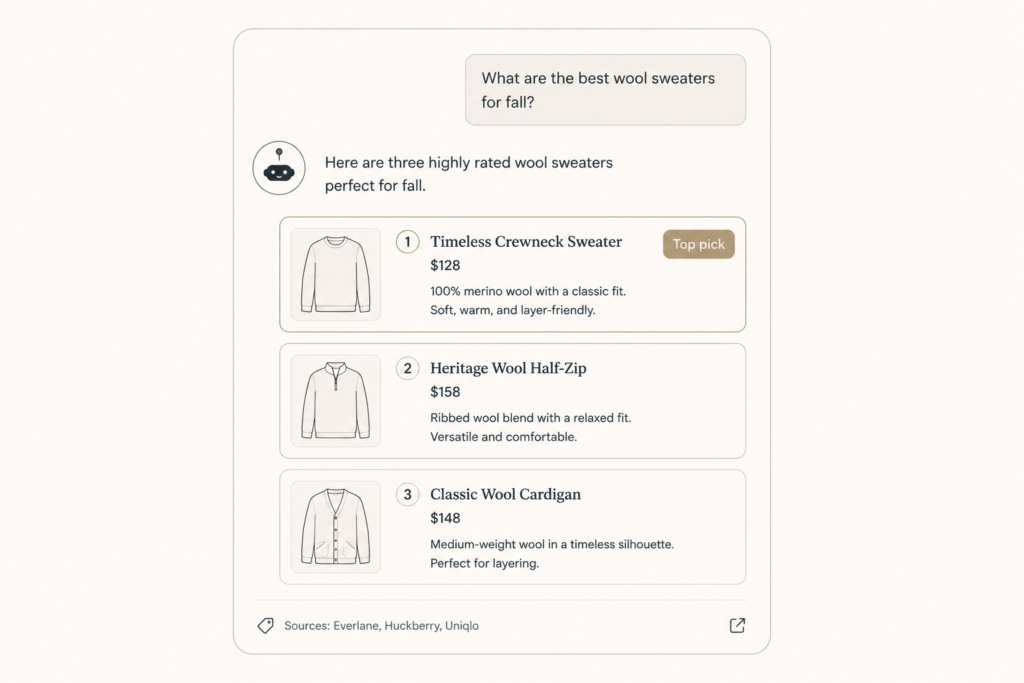
People used to start shopping on Google. Now they ask an AI. They type “best everyday gold hoops under 300 dollars” into ChatGPT or Perplexity, and they buy whatever it recommends.
That changes the job. Old SEO was about ranking a page. The new job, called generative engine optimization or GEO, is about getting your products named, cited, and chosen inside an AI answer.
If the AI does not mention you, you do not exist for that shopper. Here is how to make sure it does.
Why GEO is its own discipline now
Search is splitting into two worlds. There is the old click-and-browse world, and there is the conversational world where the AI does the browsing for you.
In the conversational world, the shopper often never sees a list of ten blue links. They get one answer with a few recommendations. Being option four of ten on Google does not help if the AI only names three products.
So GEO is not a coat of paint on SEO. It is optimizing to be the source an AI trusts and quotes. The metric that matters shifts from “where do I rank” to “how often does the AI recommend me, and does it send the shopper all the way to checkout.”
Step 1: Let the AI crawlers in
This is the step most stores get wrong, and it makes everything else pointless.
AI platforms use specific crawlers to find content for recommendations. If your robots rules block them, you are invisible in AI shopping results no matter how good your pages are.
The useful nuance: you can separate the crawler that collects training data from the crawler that powers live search referrals. That lets you stay visible in AI shopping while still controlling what gets used for model training. Check your robots file and your settings, and make sure the search referral crawlers are allowed.
Get this wrong and the rest of this guide does nothing.
Step 2: Feed the AI clean, structured data
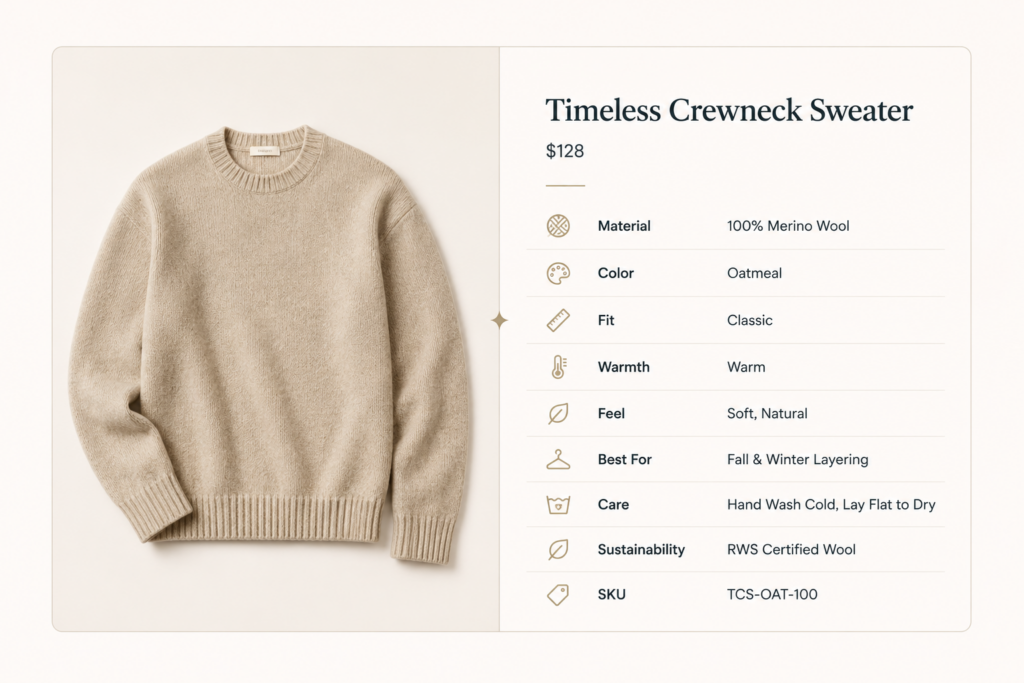
AI agents read structure, not vibes. They want clear, machine-readable facts about each product.
Fill in every attribute: materials, dimensions, weight, color, price, availability, and any spec that matters in your category. Use proper product schema so the data is labeled in a way machines understand. Keep pricing and stock accurate, because an AI that quotes the wrong price creates a refund and a complaint.
Think of it this way. A vague product page is a closed book to an agent. A fully structured one is an open spreadsheet it can read and trust.
Step 3: Answer the questions buyers actually ask
AI shopping runs on natural-language questions. So your content should answer those questions directly.
Write content around real buyer questions. “What is the difference between lab-grown and natural stones.” “Which metal is best for sensitive skin.” “How do I size a ring without a sizer.” When your page clearly answers the exact question a shopper asks the AI, you become the obvious source to cite.
Short, direct answers near the top of a page work better than long windups. The AI is scanning for the cleanest answer to lift.
Step 4: Build trust signals the AI can verify
Here is a behavior worth knowing. After an AI recommends a brand, most shoppers verify it. One 2026 study found that almost all shoppers check before buying, with many Googling the brand or reading reviews right after the AI names it.
So AI visibility alone is not enough. You need a verification presence. Real reviews, a credible brand presence, and consistent information across the web all reassure both the AI and the human checking its work.
The play is dual. Be visible to the AI, and be trustworthy when the human double-checks.
Step 5: Measure the right things
Old metrics like keyword rank tell you less now. Track the things that map to AI shopping.
Watch your AI referral traffic, the visits coming from citations in ChatGPT, Perplexity, and similar. Watch whether the AI completes the journey to a product or checkout page. And watch how broad your topical authority is, meaning how many related questions an AI treats your site as a primary source for.
There are tools that monitor brand mentions across AI platforms, ranging from cheap to enterprise pricing. You do not need the expensive one to start. You need to know whether you are being mentioned at all.
The takeaway
GEO is about being the product an AI names and the source it trusts. Let the right crawlers in, feed clean structured data, answer the exact questions buyers ask, and back it with real trust signals the human can verify.
Start with the crawler check today, because if the AI cannot read your pages, nothing else you do matters.
Want help here? I build an AI chatbot grounded in your catalog and policies.
For the wider strategy, read the full GEO playbook for 2026.

1 comment
[…] is the heart of it for product pages. I go deeper in GEO for product pages, and for jewelry specifically in structured product data for […]
Comments are reviewed before they appear, so yours will not show up straight away. Your email is never published.