
Last year your team asked an AI to write an email. This year you can ask it to send the email, book the follow-up call, update the CRM, and flag the deal for review. That jump, from answering to acting, is the whole story of 2026.
The buzzword for it is agentic AI. Strip away the hype and it means one thing: software that can take a goal, break it into steps, and finish the job with little hand-holding.
I want to walk you through what actually changed, where it breaks, and the steps worth taking this quarter. No theory. Just what works.
What “agentic” really means
A chatbot waits for you. You type, it replies, you type again. It has no memory of the goal and no ability to do anything outside the chat window.
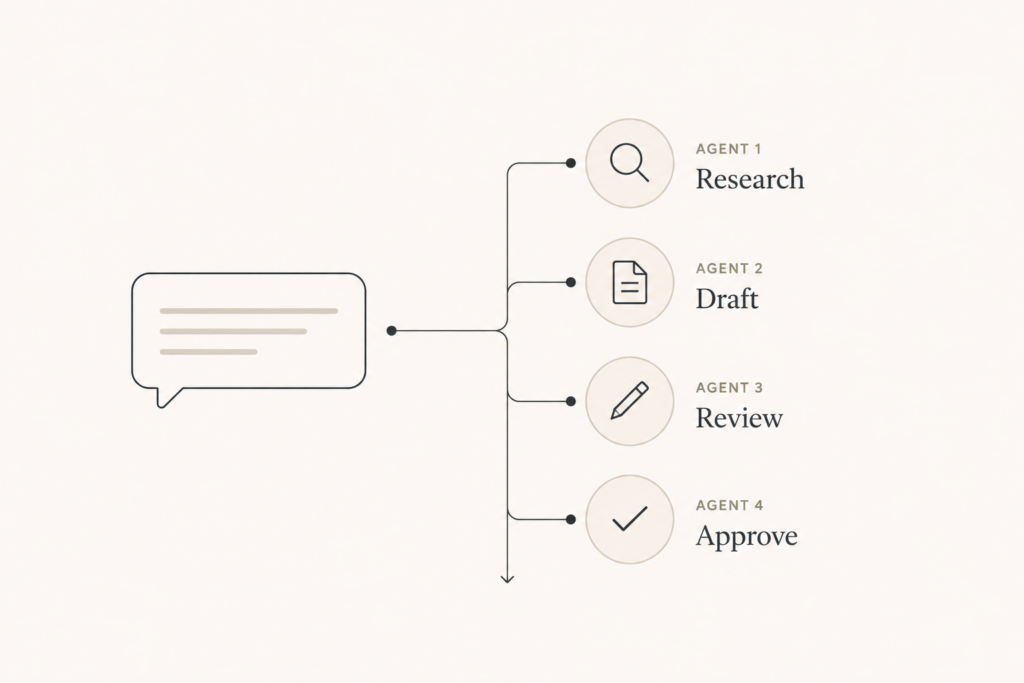
An agent is different. You give it an outcome, like “find me three suppliers under budget and draft the outreach,” and it plans the steps, calls the tools it needs, checks its own work, and comes back with a result.
The difference is action. A copilot suggests. An agent does.
Most teams in 2026 are running somewhere in the middle. They use single agents for narrow jobs and keep a human in the loop for anything that touches money or customers. That is the smart place to be.
The shift from one model to many
The bigger change this year is multi-agent systems. Instead of one giant model trying to do everything, you get a small crew of specialized agents that hand work to each other.
Think of it like a kitchen. One agent preps, one cooks, one plates, one checks the order. Each is good at its slice. A coordinator keeps them in sync.
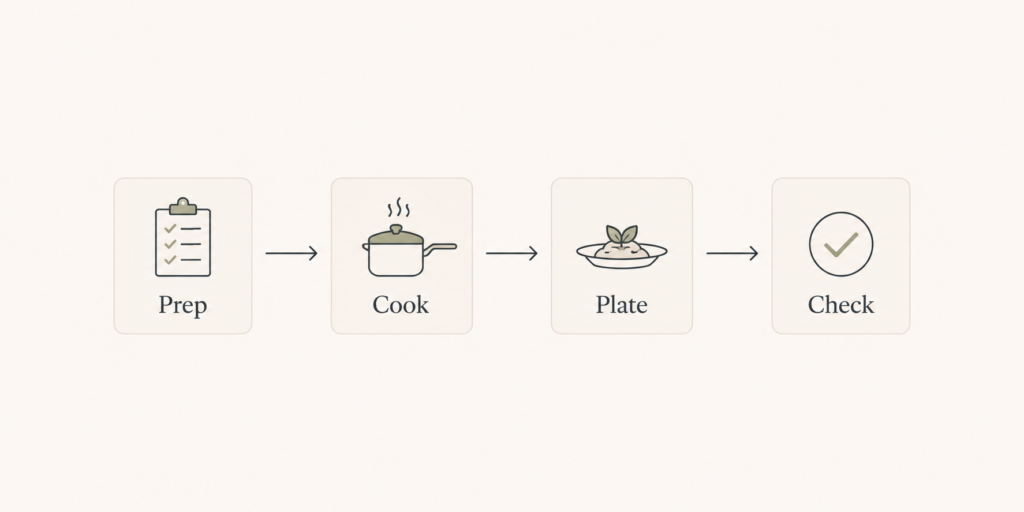
Why does this matter to you? Because narrow agents are easier to test, cheaper to run, and far less likely to go off the rails. A focused agent that only handles refunds will beat a do-everything model on that one task almost every time.
The Stanford AI Index has tracked a steep drop in the cost of running capable models over the past two years, and reasoning models have closed much of the gap on tasks that used to need a human. That combo, cheaper plus smarter, is why agents went from demo to deployment.
Where agents earn their keep right now
You do not need a moonshot. The wins in 2026 are boring and profitable.
Customer support triage. An agent reads the incoming ticket, pulls the order history, drafts a reply, and routes the hard cases to a person. Teams report cutting first-response time by half or more.
Sales and lead handling. An agent enriches a new lead, scores it, drafts a personalized first message, and books time on the calendar. The rep shows up to a warm call instead of doing data entry.
Operations and reporting. Ask once for “last month’s top products and where conversion dropped,” and the agent queries the data, builds the chart, and writes the summary. No more clicking through five dashboards.
Content and merchandising. Agents now draft product copy, generate variant images, and A/B test the results, then keep the winner. The human sets the brand rules and approves.
Notice the pattern. In every case the agent handles the repetitive 80 percent and a person owns the judgment calls.
The part nobody likes to talk about: reliability
Here is the honest version. Agents still fail, and they fail in ways that cost real money.
They hallucinate. They take a wrong turn three steps deep and you do not notice until the output is wrong. They can loop, burning tokens and budget while you sleep. And if you wire them to live tools, a bad instruction can trigger a real action, like a real refund or a real database change.
So the rule for 2026 is simple. Match the autonomy to the risk.
Low risk and reversible, like drafting copy? Let the agent run. High risk and permanent, like issuing payments or editing production data? Keep a human approving every step.
Build an off switch. Set hard spending limits on your API accounts. Log every action so you can see what the agent did and undo it. These are not nice-to-haves. They are the difference between a tool and a liability.
A 90-day plan you can actually run
You do not need a strategy deck. You need one good win, then a second.
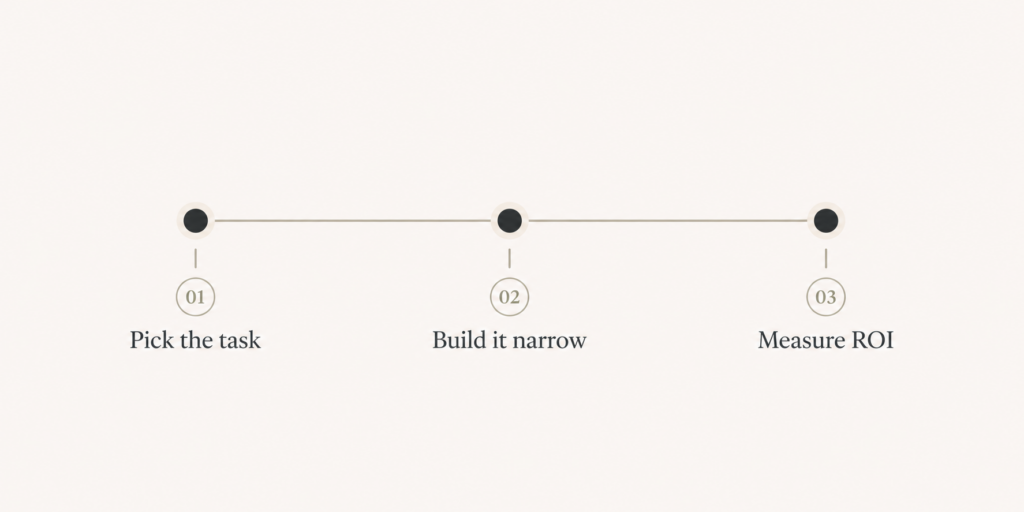
Days 1 to 30: pick one painful, repetitive task. Look for something that happens often, follows clear rules, and is low risk if it goes wrong. Ticket triage, lead enrichment, and weekly reporting are all good first picks. Write down exactly what “done right” looks like.
Days 31 to 60: build it narrow and keep the human in. Use an existing agent platform rather than building from scratch. Start with the agent drafting and a person approving. Track two numbers: time saved and error rate. If errors climb, tighten the task, do not widen it.
Days 61 to 90: remove the easy approvals and measure ROI. Once the agent is reliably right on the simple cases, let it run those without sign-off and keep humans on the edge cases. Now you can put a real dollar figure on it: hours saved times your loaded labor cost, minus what you spend on tokens.
If the math works, repeat the loop on the next task. If it does not, you learned that cheaply. Both are wins.
What to watch for the rest of the year
Three things are worth keeping an eye on.
Standardized tool access is maturing fast. Protocols that let agents safely connect to your apps and data are becoming the norm, which makes agents far more reliable than the early bolt-on connectors.
On-device and smaller models are getting good enough for many tasks, which cuts cost and keeps sensitive data off third-party servers.
And context engineering, the practice of feeding an agent the right information at the right moment, is quietly becoming the skill that separates agents that work from agents that flail.
The takeaway
Agentic AI in 2026 is not magic and it is not a threat to ignore. It is a set of tools that can do real work if you give them a narrow job, keep a human on the risky parts, and measure the result.
Pick one task this week. Build it small. Watch it for a month. That is how this pays off, one boring, profitable win at a time.

Comments are reviewed before they appear, so yours will not show up straight away. Your email is never published.