
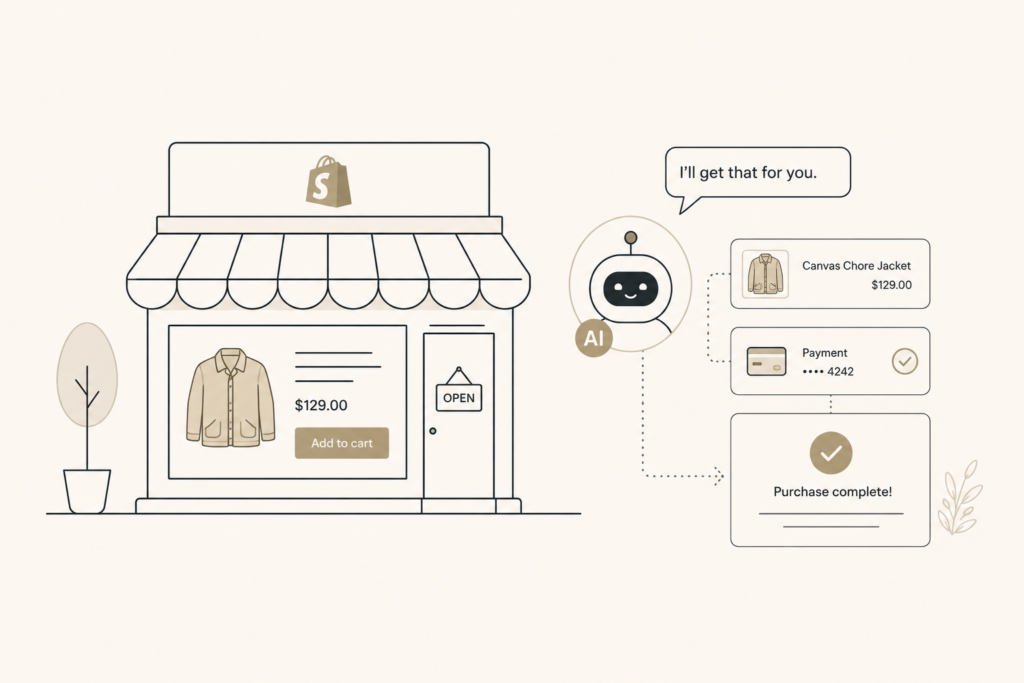
The AI conversation in ecommerce just changed shape. Last year it was about writing product descriptions. This year it is about software that can shop, decide, and act on your behalf, and on your customer’s behalf.
If you run a Shopify or WordPress store, a few of these shifts are going to touch your revenue whether you plan for them or not. So let me show you what is moving, what it means for your store, and exactly what to do in the next 90 days.
Trend 1: Agentic commerce is real now
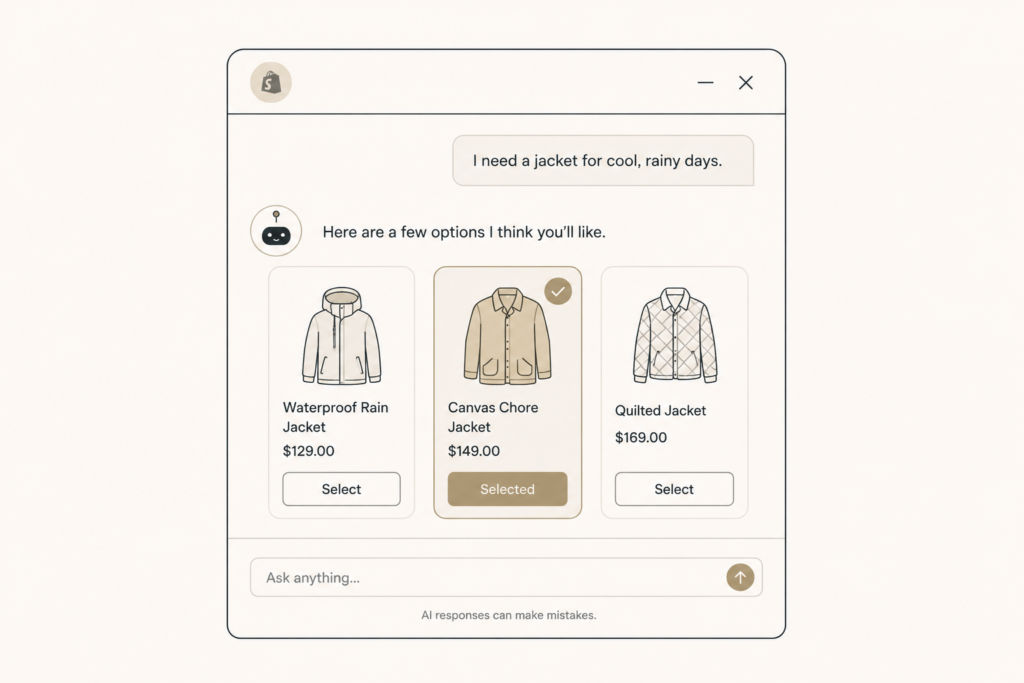
The biggest shift is agentic systems, AI that takes a goal and finishes the job instead of just answering a question.
On the merchant side, this looks like Shopify’s Sidekick running a full task from one prompt: create a discount, tag the collection, draft the email, all in sequence. The repetitive admin work that ate your afternoons starts to disappear.
On the customer side, something stranger is happening. AI assistants are beginning to shop for people, browsing, comparing, and even buying inside chat platforms. Shopify has leaned into this with agentic storefronts that let stores sell inside AI chat experiences.
What it means for you: your store needs to be readable by machines, not just people. Clean product data, structured information, and clear specs matter more every month, because increasingly the first “visitor” to your product page is an AI deciding whether to recommend you.
Trend 2: Reliability beats flashiness
Early AI features were impressive and unpredictable. In 2026 the serious work moved to making them dependable.
This is why multi-agent setups, where small specialized agents each handle one narrow job, are winning over one giant do-everything model. Narrow agents are easier to test and far less likely to go off the rails.
What it means for you: do not chase the flashiest tool. Pick AI features that do one job reliably, like product recommendations or support triage, and keep a human checking anything that touches money.
Trend 3: Context engineering is the new skill
Here is a quiet one that matters. The teams getting real results from AI are the ones feeding it the right information at the right time.
It is called context engineering, and it is replacing clever prompting as the skill that separates AI that works from AI that flails. An agent with access to your live inventory, your customer history, and your brand rules makes good calls. The same agent with no context guesses, and guessing is where AI embarrasses you.
What it means for you: the value is in your data. Clean it up. Structured product info, accurate inventory, and clear customer records are now fuel for every AI feature you turn on.
Trend 4: On-device and smaller models
Not every AI task needs a giant cloud model anymore. Smaller models, some running on-device, are now good enough for a lot of jobs.
This matters for two reasons: cost and privacy. Smaller models are cheaper to run, and keeping work on-device keeps sensitive customer data off third-party servers.
What it means for you: as you add AI, ask whether a lighter, cheaper model does the job before reaching for the most expensive one. Your token bill will thank you.
Trend 5: Platform AI is now native, not bolted on
Both major platforms made AI part of the core in the last year.
Shopify ships Sidekick and Magic as working tools across all plans, built for merchandising, content, and operations. WordPress 7.0, the Armstrong release from May 2026, shipped a native AI framework with the AI Client, Connectors screen, and Abilities API, supporting OpenAI, Anthropic, and Google out of the box.
What it means for you: you may already be paying for AI capability you have not switched on. Before buying another tool, check what your platform now does natively.
Your 90-day action plan
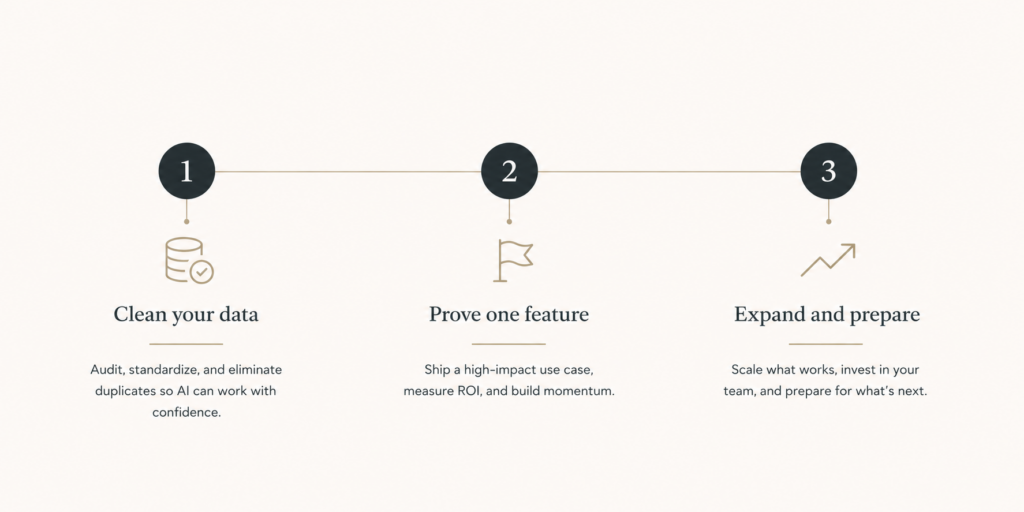
Trends are useless without steps. Here is how to act on these in three focused months.
Days 1 to 30: clean your data and audit what you have. Fix your product information, inventory accuracy, and customer records. This is the unglamorous work that makes every AI feature actually work. At the same time, list the native AI tools your platform already includes and what you might be paying twice for.
Days 31 to 60: turn on one native feature and measure it. Pick a single high-value, low-risk use. On Shopify, that might be Sidekick for analytics and discounts or Magic for product imagery. On WordPress, an editor AI task or a recommendation plugin built on the new framework. Keep a human approving, and set hard spending limits if you are using your own API keys. Track time saved and error rate.
Days 61 to 90: expand what works and prepare for agentic traffic. Roll the winning feature out wider and drop the easy approvals once it is reliably right. Then take one step toward machine-readable commerce: structured product data and clear specs, so AI shoppers and assistants can find and recommend you. Put a real ROI number on the whole effort, hours saved times your labor cost minus what you spent.
The takeaway
The 2026 shifts come down to a few moves. Agentic systems are doing real work, reliability and clean data matter more than flash, and your platform probably already has native AI worth using.
Spend the first month on your data, the second proving one feature, and the third expanding it and getting ready for AI-driven shopping. Do that and you are ahead of most stores, not chasing them.
Want the full playbook? Read the 2026 guide to getting your store recommended by AI.

Comments are reviewed before they appear, so yours will not show up straight away. Your email is never published.