
Here is the uncomfortable truth about Black Friday. The day your store earns the most is also the day it is most likely to break. Traffic triples, your slowest page gets hammered, a discount code misfires, and a third-party app times out at exactly the wrong minute. If that sounds familiar, your Shopify Black Friday preparation needs to start now, not in November.
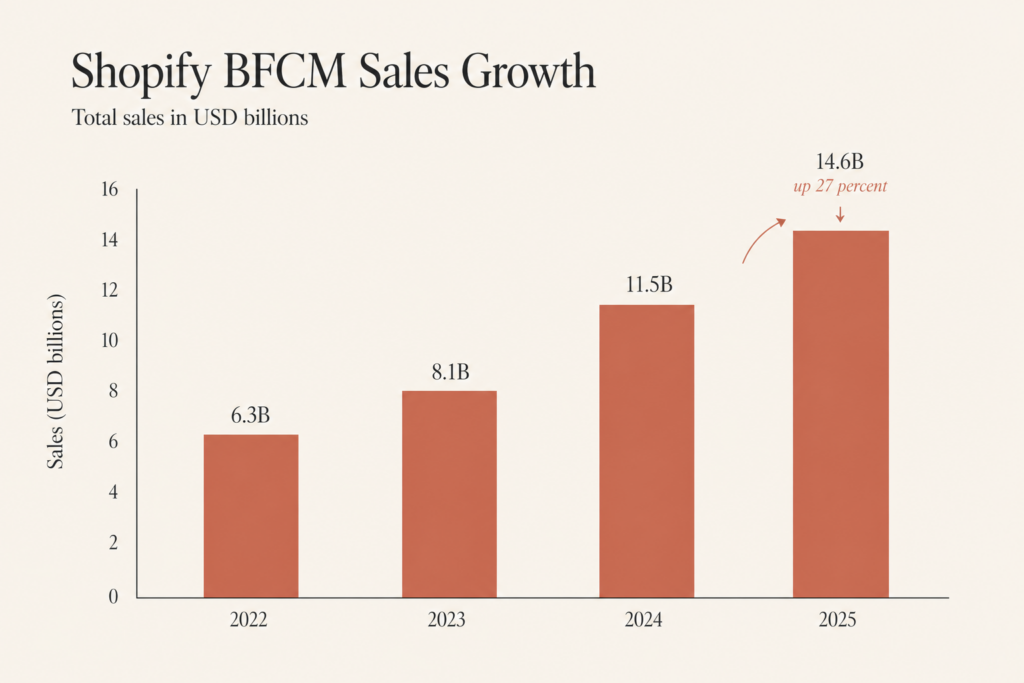
I build and rescue Shopify stores for US and UK retailers, and I have watched the same pattern every year. The brands that win BFCM are not the ones with the biggest discount. They are the ones whose store stays fast, whose checkout never flinches, and whose team is not improvising at 12:01pm. Shopify merchants did a record 14.6 billion dollars over the 2025 BFCM weekend, up 27 percent year over year, with 81 million shoppers buying. Sales peaked at 5.1 million dollars per minute. You want to be ready for your slice of that.
So here is the plan I run for clients. Ninety days, three phases, zero panic.
Why Shopify Black Friday preparation beats promotion
Most BFCM advice is about the offer. Bigger banner, deeper discount, more emails. That matters, but it is the easy 20 percent. The hard 80 percent is whether your store can carry the load without leaking revenue.
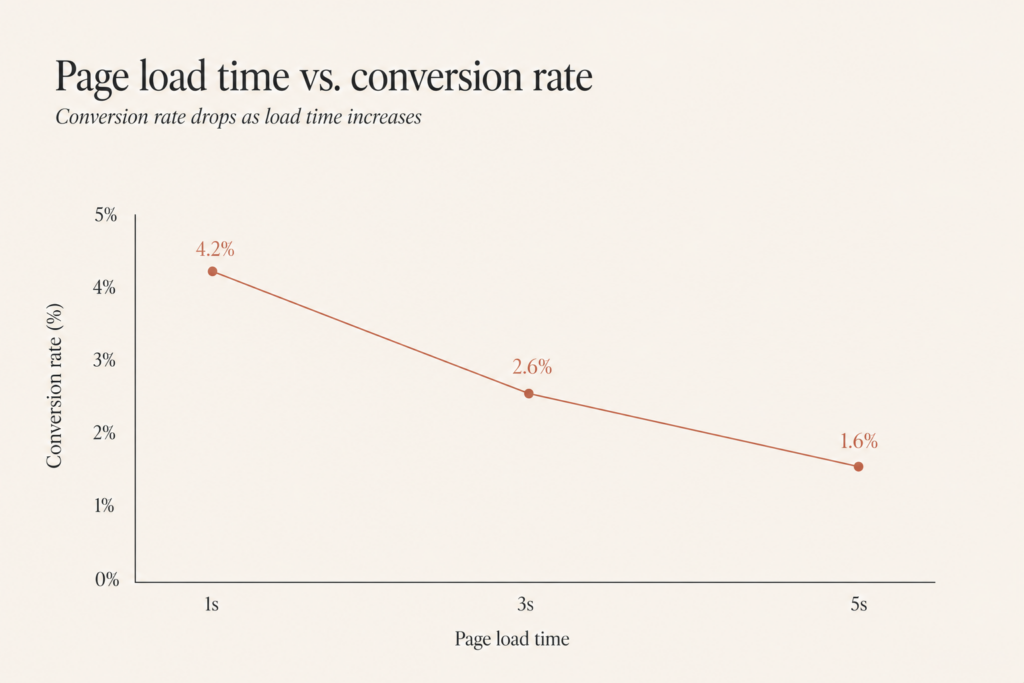
Here is the math that should change your priorities. Google and Deloitte’s research found that a 0.1 second improvement in load speed lifted retail conversions by 8.4 percent and average order value by 9.2 percent. Run that the other way: a single second of added delay drops conversions by about 7 percent. On Black Friday, when you are paying premium ad costs to push traffic, that is thousands of dollars evaporating per hour.
Your preparation budget should protect speed and checkout first, and the discount second. Get that order wrong and you are pouring expensive traffic into a leaky funnel.
Phase 1 (now through August): plan, source, and audit
You are roughly five months out. This window is for decisions, not design tweaks. Stores that begin prep 8 to 12 weeks ahead reportedly outperform last-minute planners by 40 to 60 percent in total BFCM revenue, so the work you do quietly now compounds.
Lock these down first:
- Pick your discount, and protect margin. Twenty to thirty percent is the sweet spot for most Shopify stores. Under 15 percent feels weak when shoppers expect real deals, and over 40 percent trains people to wait and erodes brand value. Decide which products get cut, by how much, and protect your hero and high-margin items.
- Order inventory against a realistic forecast. Look at last year’s BFCM units, not your average month. Cross-border orders were 16 percent of global BFCM transactions in 2025, so if you ship internationally, plan stock and carriers for it.
- Run an app and theme audit. Every app you installed “to test” is still loading scripts on your storefront. I have cut 480 dollars a month off a single store by replacing bloated apps with native code, and the speed win was bigger than the savings. Remove what you do not use before peak season, not during it.
- Start growing your email list now. Around 61 percent of shoppers prefer to hear about BFCM deals by email, and merchants who send three or more emails over the period generate three times the revenue of those who send one. Your November list is built in the summer.
Phase 2 (September to early November): make it fast and bulletproof
This is the build phase, and it is where my work concentrates. The goal is a store that holds its speed budget under heavy traffic and a checkout that never gives a shopper a reason to bail.
Hit a real speed budget
Mobile is no longer the secondary screen. In 2025, mobile drove around 54 percent of BFCM online sales and 57 percent of transactions happened on a phone. A slow mobile experience loses the majority of your buyers.
Set a hard budget: under 3 seconds to interactive on mobile, and watch INP (Interaction to Next Paint), which is the metric that now exposes janky buttons and laggy variant pickers. Compress and lazy-load imagery, defer non-critical scripts, and kill render-blocking app embeds. My deeper walkthroughs on getting a Shopify store under 3 seconds and the Core Web Vitals 2026 checklist cover the exact steps.
Harden the checkout
Checkout is where intent turns into money, so remove friction. Offer guest checkout, trim required form fields, and surface trust badges and reviews near the buy button. Make sure Shop Pay is enabled and tested. It accounted for 32 percent of BFCM orders in 2025 and grew 39 percent year over year, partly because one-tap checkout converts.
Offer a real spread of payment options too: card, digital wallet, and buy now pay later. Each missing option is a quiet exit.
Test under load, then freeze
Two weeks out, stop building. Run end-to-end test purchases through every payment method on desktop and mobile, apply each discount code, and confirm order emails send correctly. Then set a code freeze: no new features, no theme experiments, no app installs during peak. Confirm you have automated daily backups and a tested restore point so a bad change is a five-minute fix, not a catastrophe.
Phase 3 (BFCM weekend): operate, do not build
The store is ready. Now you run it like an operations team, not a dev team.
- Watch live. Keep an eye on real-time analytics, error logs, and your slowest pages so you catch a misfiring app before customers do.
- Staff for support. BFCM generates 3 to 5 times normal customer-service volume. Update your FAQ with sale-specific questions, set up automated replies, and brief your team on the top five issues before they hit.
- Have a rollback plan. If something breaks, you restore to your clean point. You do not debug live during peak traffic.
If you are running paid traffic into all this, make sure the campaign structure is not wasting budget. My Google Ads for Shopify post pairs well here, and the Klaviyo flow stack post covers the email side that carries the most revenue.
The short version
Remember the order of operations: speed and checkout reliability first, offer second, everything else third. A fast, stable store at a 20 percent discount will out-earn a slow, fragile store at 40 percent every time. That is the whole game.
FAQ
When should I start Shopify Black Friday preparation for 2026? Start by midsummer for planning and inventory, and begin technical work 8 to 12 weeks out (around September). Stores that prepare early reportedly outperform last-minute planners by 40 to 60 percent in BFCM revenue.
What discount works best on Shopify for Black Friday? Twenty to thirty percent is the sweet spot for most stores. Below 15 percent underwhelms shoppers expecting real deals, and above 40 percent can damage perceived brand value and attract one-time bargain hunters. Protect hero and high-margin products.
How fast should my Shopify store load for BFCM? Aim for under 3 seconds to interactive on mobile and keep an eye on INP. Mobile drove about 54 percent of BFCM sales in 2025, and roughly every second of added delay costs you around 7 percent of conversions, so speed is a revenue lever, not a vanity metric.
Should I freeze changes before Black Friday? Yes. Set a code freeze about two weeks out: no new features, no theme experiments, no fresh app installs. Run end-to-end tests, confirm daily backups and a tested restore point, then operate in monitor-and-respond mode through the weekend.
Do apps slow down my Shopify store during BFCM? They can. Unused and heavy apps load extra scripts on every page and add latency exactly when traffic peaks. Audit your apps before the season and replace bloated ones with native code where possible.
Conclusion
Black Friday rewards preparation, not heroics. The brands that quietly bank record numbers are the ones who decided their offer in summer, hit a real speed budget by September, hardened checkout, and then froze the code and watched the dashboards. Everything else is noise.
Want a second set of eyes before the rush? I will run a free audit of your store’s speed, checkout, and app stack and show you where revenue is leaking. Book a call or grab a free audit at javaid.dev/contact and go into BFCM 2026 ready.

Comments are reviewed before they appear, so yours will not show up straight away. Your email is never published.